Monday to Friday 09:00 - 17:00Saturday to Sunday Closed
ChequeBankTransfer
Commercial Solar PanelsDomestic Solar PanelsRenewable HeatBattery Storage Systemsheat pumpsground source heat pumpsair source heat pumpsev chargingsolar battery storagecommercial solar pvsolar pvsolar installationssolar pv installationsheat pump installationssolarsolar installerscommercial solar installersdomestic solar installerssolar battery installersev charging installationsev charging installersresidential solarresidential solar installationscommercial solar solutionssolar panels for businessessolar panels for warehousessolar panels for agriculturesolar farmssolar panels for healthcaresolar panels for educationsolar panels for manufacturingsolar panels for companiessolar for businessessolar panelssolar pv for businessessolar pv for healthcaresolar pv for constructionsolar pv for educationsolar pv for logisticssolar pv for warehouseswarehouse solarssolars for sme
Business profile
UK-Wide Solar Installer
An independent UK firm, Geo Green Power specialises in designing and installing comprehensive renewable energy systems, such as solar PV, heat pumps, and battery storage, offering customised, complete services to businesses and homeowners to lower their energy expenses and environmental impact while advancing the UK's commitment to Net Zero.
Commercial Solar Installations
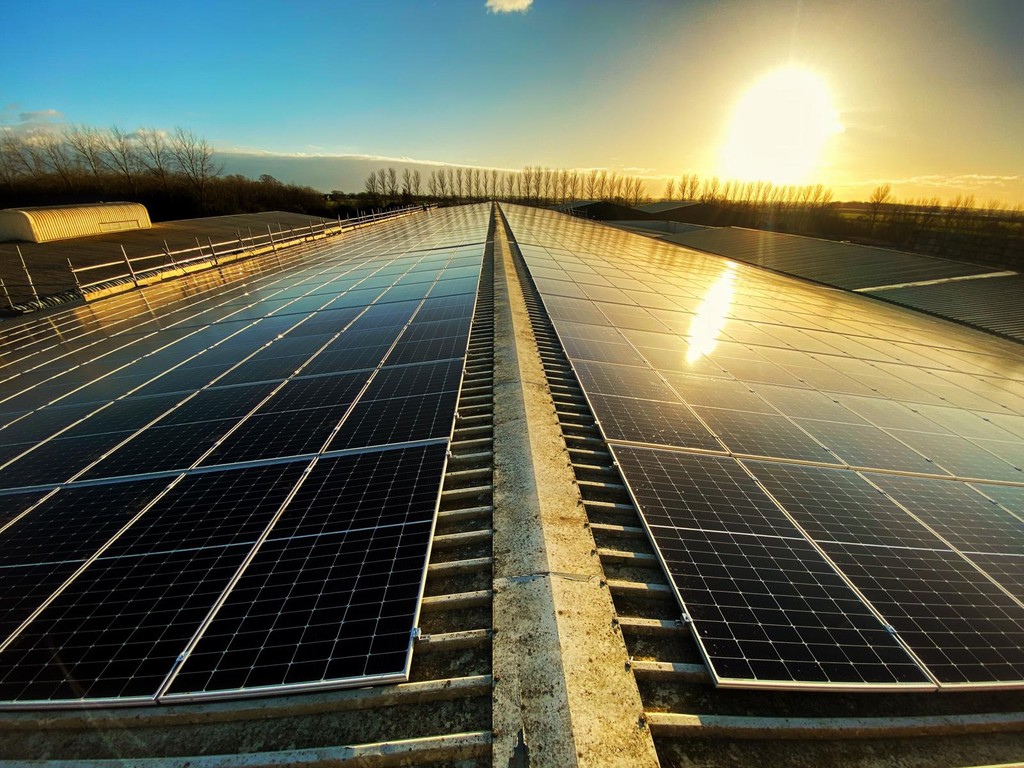
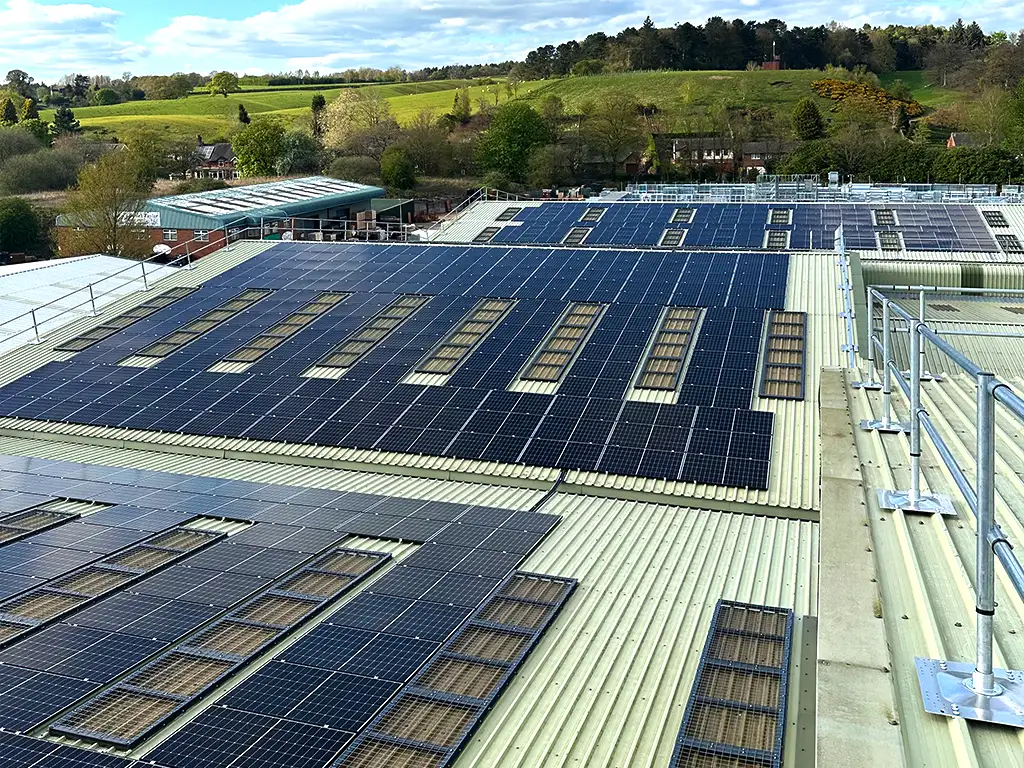
Geo Green Power specialises in providing commercial solar PV solutions, including large-scale rooftop and ground-mounted systems, to UK businesses across sectors like manufacturing, warehousing, and agriculture, helping them cut energy costs and improve energy security.
Domestic Solar Installations
Geo Green Power's domestic solar service involves designing and installing high-efficiency solar PV and battery storage systems for homeowners, providing a complete service from initial consultation to installation and aftercare, enabling residents to cut their electricity bills and increase energy independence.
EV Charging Installations
Geo Green Power provides professional EV charging installations for both domestic homeowners and commercial businesses across the UK. Their service includes the complete design and installation of various charging systems, such as the MyEnergi Zappi, Tesla Wall Connector, and GivEnergy 7.2kW chargers, and they emphasise integrating these units with existing or new solar PV and battery storage systems, allowing users to charge their vehicles using self-generated, free renewable energy. For businesses, they offer bespoke charging solutions to support employee fleets and customer parking, aligning with corporate sustainability goals.
Heat Pump Installations
Geo Green Power specialises in the design, installation, and maintenance of highly efficient Air Source and Ground Source Heat Pumps for both domestic and commercial clients across the UK, helping them replace traditional boilers to achieve substantial reductions in fuel bills and carbon emissions.
Geo Green Power went above and beyond to support the implementation of this project and their vast knowledge, support, and attention to detail was second to none.
The systems are working well and we’re already seeing a higher than expected return even in the less favourable periods of the year.
Andrew Thomson, Facilities Manager
Grantham Meres Leisure Centre
The team at Geo Green Power were brilliant. The site-workers completed the job carefully, efficiently and quickly. The installation has been working really well and we’re very pleased with it so far.
Holly Jarvis, Project Manager
FAQs
What are the best solar panels for commercial use?
Canadian solar are the best solar panels to use for commercial properties.
What size commercial solar panels are installed?
In terms of power, the size of the commercial solar panels installed are 435W.
What output do commercial solar panels generate?
On a sunny day, our commercial solar panels will generate around 435W.
How much do commercial installations cost in the UK?
The cost of commercial solar panels depends on the requirements of the installation. Generally, an installation can cost anywhere between £45,000 and £300,000.
How much upfront investment is needed for a solar battery storage system?
Upfront costs can range from £1,200 upwards depending on system size. For a more detailed quote, contact Geo Green Power to discuss the options.
What are the ongoing operating costs for a solar storage system?
Ongoing costs include electricity, maintenance, monitoring and battery replacement every 5-10 years. Maintenance is key for reliability but, generally speaking, solar arrays and battery storage systems are low maintenance.
What space requirements are there for commercial solar battery installations?
The space requirements for commercial solar battery installations vary depending on the size of the battery system, the type of battery you choose and the location of the installation. A good rule of thumb is that you need about 1 square foot of space for every kilowatt of battery capacity. So, a 100kWh battery system would require about 100 square feet of space.
What is the typical payback period for commercial solar storage in the UK?
With available incentives, payback periods can be 5-10 years. This depends on energy usage, tariff rates, investment tax breaks and export payments.
Do I need to install solar PV and batteries together in the UK?
Solar batteries can certainly be added later. Detailed modelling of your requirements will help you understand if a combined PV and storage from the outset will deliver a better return.
Are my solar panels generating as much energy as possible?
One easy way you can check if your panels are performing at their best is to check the estimated annual generation figure, which you can find in your MCS certificate. If this number isn’t accurate to the figure on your generation meter, then this can be a sign that there may be an issue with your system. Checking your generation figure every quarter is a great habit to get into – especially when you’re approaching the warmer months, as you’ll want your panels working at full capacity and taking advantage of the summer sun!
What is the lifespan on solar panels and inverters?
Most solar panels come with a minimum 20-year warranty – so they’re truly future-proof! If there’s an issue, it’s more likely to be your inverter or power supply. The lifespan of inverters, unfortunately, isn’t as long as that of the panels. Before you report a fault, it’s worth checking a few things: Is there enough ventilation? Inverters can overheat if not provided with space to breathe. Making sure they’re not boxed in or near heat sources (radiators etc) is really important to ensure the longevity of your inverter. Is the inverter clean and free of dust? Regularly cleaning your inverter can extend its lifespan, as dust can easily clog up the vents and cause overheating.
Is there a problem with my inverter?
Depending on how good the manufacturer is, inverters typically have a life span between 10-15 years. Fault codes on inverters vary depending on the manufacturer. Some common codes to look out for include:
Error 509 = No energy is being fed back to the grid. The common cause of this error is dirt or debris on your panels.
Error 314 = This is a calibration timeout; which should rectify itself when the inverter repeats its start-up routine.
Green Flashing Light = A connection issue. Once the conditions for the feed-in operation are met, the inverter will start the feed-in operation. Make sure the power supply is secure and connected to the PV system.
What can cause solar panels to stop working?
It is very unlikely that your actual panels will stop working as there are no moving parts, a fault with your system is much more likely to be an error with your inverter. Panels do however stop working if they are damaged from falling objects, if they or the cabling is moved and becomes loose or if they become excessively dirty. All of these issues can be identified during service.
Can you replace just one solar panel?
Yes. In fact, solar panel systems are designed so that you can easily handle solar panel replacement if it was ever needed.
How much does it cost to replace a broken solar panel?
This will depend on how easy it is for us to reach and replace a specific panel. Costs would vary from £350 + VAT for the panel and work involved.
How do I clean my solar panels?
In most cases, local rainfall and the angle of installation means that solar panels are self-cleaning. However, dust, bird droppings, tree sap, lichen and other dirt can build up so from time to time it is worth cleaning them manually. A spray with a garden hose is often enough to remove surface dirt, or most window cleaning companies will have a reach-and-wash system that can be used to get the panels thoroughly clean in next to no time. We do recommend an annual service of your solar PV system and as part of this, our team can inspect your panels and assess whether they need cleaning.
When are my panels most efficient?
Solar panels will be most efficient when the sun is hitting them directly, which is around midday. Light intensity is the most important factor when considering efficiency – when the sun is lower in the sky, light won’t be as intense and this will reduce the output of your panels. Seasonal changes can also affect the efficiency of your panels, as during the summer, the sun shines for longer than in winter. From around May to September, your solar PV system will produce more energy than October to April as the days are shorter. However, remember that solar panels don’t need direct sunlight to function. Even on cloudy days, your solar panels will still absorb light and continue to work effectively. Whatever the weather, you can benefit from energy production year-round – it will simply be more effective on sunnier days, and at times when the sun is highest in the sky.
How do I prevent birds from nesting under my solar panels?
Birds can be tempted to nest under solar panels, particularly pigeons who tend to build their nests in awkward places. The area under a solar panel is shaded and offers protection from wind and rain, so it’s no surprise that this can be an issue. There are ways you can prevent it from happening. When we install your solar PV system, we can pigeon-proof your panels – simply ask us about this when you book in a consultation, and we can add it to your order. While we can’t retro-fit pigeon-proofing, we do have a useful guide on how to handle pigeons nesting under your solar panels.
Can leaves, moss and debris gather under or on the panels?
It’s not common for leaves or other plant materials to be a problem, as the panels sit quite close to the roof tiles. However, if leaves were to gather under the panels, they could be dealt with as part of a maintenance visit by a member of our team. Likewise, moss doesn’t typically form on solar panels, but if you have noticed it developing, you can discuss it with whoever is cleaning your solar panels so that they know to take extra care to remove it.
Do I need permission to install solar panels?
You don’t typically need planning permission for home solar PV systems, unless you have a flat roof or your property is a listed building or in a conservation area.
Does the UK Government give grants for solar panels?
Grants for solar are very few and far between because solar panels offer such a good return on investment. The financial benefits of solar PV are enough on their own to warrant the original cost and are therefore not seen as something that needs incentivising. There are currently no national grants available, but there may be a local authority scheme in place where you live. The best place to start is your local council’s website or helpline.
Can I move my solar panels to another house?
Yes, you could uninstall your solar PV system and reinstall it at a new house, but we wouldn't advise that you do this. Your system will be adding value to the original property that will be lost if you move it, you will need to inform the DNO of the move and ask permission to reinstall and the cost involved to uninstall and reinstall your system would most likely be better invested in a new system for the other property.
When should you replace solar panels?
A long-term investment, residential solar panels have a 25-year guarantee and can continue generating electricity for up to 30 years or more.
Do I need to tell my electricity supplier about my solar panels?
Yes, if you install solar panels on your property then your electricity supplier will need to be notified. This is so they can measure your electricity usage correctly. You will also need permission from your DNO (District Network Operator).
Will solar panels cause damage to my roof?
Solar panels are typically mounted to a rail system, which is fixed to your roof. Your solar PV system is specifically designed to maintain the strength and integrity of the roof, while also staying watertight, so you don’t need to worry about damage.
What is the SEG scheme?
The Smart Export Guarantee is a scheme that enables you to sell any surplus energy your solar panels produce back to the grid. When your solar PV system is installed you will need to have a smart meter installed at the same time. Once your system is commissioned, you can investigate the current SEG rates being offered and apply to any SEG scheme. Your SEG provider does not have to be your electricity provider. Export rates vary and we’d advise a potential customer to do their research and get the best rate.
What is the installation cost for air source?
Our ASHP installations start from around £12,000
How much do ASHPs cost to run?
It’s very difficult to estimate the running costs of your installation as it will depend on the size of the space you want to heat, the temperature you are running the system at and a number of other factors such as insulation and whether you are using underfloor heating or radiators.
We will be happy to provide an estimate of your running costs if you would like to discuss your project.
What will my return on investment be?
The return on investment that you receive will be determined by the type of fuel you are looking to replace and the cost of running your system. Higher returns can be achieved when switching from oil or LPG heating systems.
The current Renewable Heat Incentive provides payments that, in a number of cases, can cover the cost of the installation.
Heat pumps require less maintenance and repair than most traditional heating systems, which also makes them an attractive investment.
What will an on-site survey for an ASHP help to determine?
An on-site survey will help to determine: the right location, your heating needs and a timescale for your project.
Is an ASHP cheaper to run than a Gas Boiler?
Yes, an Air Source Heat Pump is cheaper to run than a gas boiler in the long term.
Can any home install an Air Source Heat Pump?
Some homes may not be suitable for an Air Source Heat Pump. Your home may require an insulation upgrade and new radiators and heating pipework.
Is a vertical or horizontal GSHP suitable for my property?
This largely depends on the space you have available. If your property sits on a large site, you may have enough space to bury a large loop horizontally – this is typically cheaper and faster. Vertical GSHPs are more expensive but can allow the system to be installed on properties of almost any size.
Horizontal vs. vertical – what’s the difference?
One aspect of heat pumps to note is that systems can be installed either horizontally or vertically. It is important to have a loop of pipe that is large enough to extract heat effectively, and the two types of systems are used depending on the size of your property.
Vertical systems are typically more expensive to install, and require specialist equipment in order to drill the boreholes. However, they can be built with relatively little space. This makes it ideal for properties with less physical space.
Horizontal systems require more land to install, as there is clearly the need for a larger space than a vertical system, however, groundwork is cheaper as it only requires a trench for the system to be placed within, rather than deep boreholes.
Are there government grants available?
The RHI is designed to function in the same way as a grant for property owners or developers interested in investing in GSHPs. The RHI pays cash payments to owners over seven years. These payments can contribute a large amount of the initial outlay required to pay for the system.
Are there any running costs?
There are generally low on-going running costs related to GSHPs. Very little maintenance of the system is required. We work with excellent manufacturers whose systems have an excellent track record and are built to last.
Considerations when installing a domestic GSHP
It is important to consider whether a GSHP is the right choice for your property. This can be a very valuable form of renewable energy – however it is not necessarily suitable for every home or residential development. Here are some things to consider:
The type of GSHP makes an important difference – choosing a GSHP that is the right size and type is extremely important for the potential profitability of the installation. It is a good idea to work with experienced renewable energy providers who can offer expert insight and guidance.
Do you have the space? – it may be the case that you are thinking of having one type of system installed but do not have the space for it. Vertical systems are generally best if you have limited space available, however, the type of bedrock beneath your property can restrict how far down you can bury your pipes.
Setup can be expensive– while there are very few ongoing costs related to GSHPs, as they require very little maintenance, the initial cost can be high. However, the cost will be paid off with energy savings over time.
How much money can you save a GSHP?
GSHPs help you to save money in a variety of different ways. Firstly, they will draw heat from the ground which means that your property will have lower energy bills – this is especially true for those properties replacing electric or oil heating. However, you will also receive Renewable Heat Incentive Scheme (RHI) payments which pays money for heat generated.
The exact amount you can save can vary enormously depending on the size of your property or development. Typical properties with an existing gas system could see fuel bill savings alone of around £660 per year, while those with an electric system could see savings in excess of £1,000 per year. This figure doesn’t take into account additional RHI payments you will receive.
How Do I Generate My Returns?
Renewable heating systems provide an excellent return on investment. For every kWh of heat your system generates you’ll receive an RHI payment. This payment varies depending on the capacity of your system and the amount of heat you generate, however, the RHI is generous and based on these payments alone your scheme should provide a return on investment of approximately 15% per annum.
The heat is generated at a lower cost than heat sourced through conventional means such as mains gas, oil and electricity. Therefore, you’ll also see a significant reduction in your energy bills. On average a heat pump will generate 4kWh of heat to every 1kWh or electricity used to power the pump, reducing your energy consumption and bills.
Overall, taking into account the RHI payments and bill savings, a renewable heating scheme will provide a return on investment of approximately 15% per annum.
Are GSHPs worth it?
GSHPs have a full range of benefits that make them suited to many properties – they can lower fuel bills, and are especially valuable if you are replacing electric heating. As well as being financially beneficial to your property, they are also naturally good for the environment. Of course, this does mean an investment in your property. If you aren’t sure whether a heat pump is the right choice for you, we recommend speaking to us.
Do you need planning permission for a GSHP?
Under normal circumstances, GSHPs are usually considered to be permitted development, and as such you do not require planning permission. However, it is always best to seek the advice of your local council to establish whether you need to obtain planning permission in order to install your GSHP. The specifics of your property may also mean that you are required to gain permission before making significant changes – for example, if your property is a listed building.
How much land do you need for a heat pump?
A typical GSHP system may use around 100m of pipework; this means that you need to have the physical space to accommodate it. This is where the choice between horizontal and vertical systems can become important – if you don’t have the horizontal space for 100m of pipes, a vertical system may be the only option.
While it is true that having a large property gives you a broader range of options, it should also be noted that GSHPs can be built at properties of almost any size.
GSHP installation explained
It is important that you have your GSHP installed correctly. To ensure this, you should work with an experienced Microgeneration Certification Scheme (MCS) installer. It should be noted that you need to work with an MCS installer in order to qualify for RHI payments.
It is best to install a GSHP during a time of building – either during a new build or in the renovation of an old property. This is to allow your pump to be integrated into the system as a whole easily without causing significant disruption. If systems are installed correctly, they will be more efficient and last longer.
How much does a ground source heat pump cost to run and maintain?
A well-designed ground source heat pump combined with a solar PV system will provide you with low running costs over the course of its lifetime, but you still need to maintain the system regularly to keep it working optimally. Compared to fossil fuel alternatives, ground source heat pumps are far cheaper to run and maintain, with our servicing and maintenance call-out fees starting from just £249+VAT.
Ground source heat pumps can last up to 25 years when properly maintained, and we recommend annual servicing to ensure it’s working as it should. During our checks, we’ll assess the control equipment, pipework, compressor, water pump and anti-freeze mixtures. The heat pump ground collectors should also be filled and flushed approximately every 8 years.
Ground loops or boreholes?
Heat is harvested from the ground in one of two ways – ground loops or a borehole. Each has its pros and cons to bear in mind, so which should you choose for your property?
Ground Loops
Ground loops are the most popular choice for ground source heat pump installations, and they work via a collector pipe which is buried one metre below the ground to draw heat from the soil through to the heat pump. The heat that’s extracted is then continually replenished from the sun. Ground loops require plenty of unused land, typically at least three times the total square footage of your property, including both ground and upper floors.
Ground loops are cheaper to install than boreholes, and they don’t require specialist contractors to install them. The ground loop trench can also be dug out at the same time as laying the foundations for a new build, which makes them a popular option for new homes. However, they do require more land and you can’t develop the land area once the ground loops have been installed.
Boreholes
Boreholes are vertical holes drilled between 40m and 120m deep. The ground collector is then dropped into the hole to extract the heat energy, before being filled with grout to encourage more thermal conductivity. Boreholes require specialist contractors to be installed and the number of boreholes needed will depend on the property. Boreholes don’t require as much space as ground loops, but they cost almost double due to the specialist contractors, equipment and logistics involved in the project.
When choosing between ground loops or boreholes, you’ll need to consider the cost of the installation and the amount of available land you have to work with. In some cases, an air source heat pump may be a cheaper option and can work well on smaller plots. If you’re in doubt, speak to a member of our team who can advise you on the best course of action.
Do I need a ground source heat pump plant room?
A ground source heat pump unit is installed inside your property which means that you need to have space for a plant room to house the system. This needs to be taken into account early on in the design of the system, as it requires more space than the small cupboards that most properties use to house a boiler. An average ground source heat pump plant room measures around 2.1m x 1m and this would house the pump, cylinder, pipework and controller.
Costs of ground source heat pumps
The cost of a heat pump installation is dependent on several factors, including:
The size of the property
How insulated the property is
Whether you’re choosing ground loops or boreholes
The size of the heat pump
The level of support you can get from the Boiler Upgrade Scheme*
The installation process is centred on the heat loss of the property, so a property with ample insulation will require a smaller heat pump than an older property with poor insulation, as the latter will need more energy to heat the property sufficiently.
* The Boiler Upgrade Scheme is a government grant scheme designed to help the UK meet its 2050 net zero emissions target. It is available to homeowners in England and Wales and applications open in May 2022. The scheme can provide homeowners with thousands of pounds towards upgrading to a low carbon heating alternative, such as heat pumps, in place of fossil fuel boilers.
What are the benefits of EV chargers?
EV chargers are cost-effective, highly convenient and time-saving. The value of a house is also likely to increase with the addition of an EV charger.
Which electric vehicle chargers do Geo Green Power provide?
Geo Green Power provide the following EV charging systems: MyEnergi Zappi 7kW, Tesla Wall Connector 7kW, GivEnergy 7.2kW and Rolec pedastals.